
Funding helps line the path to water security
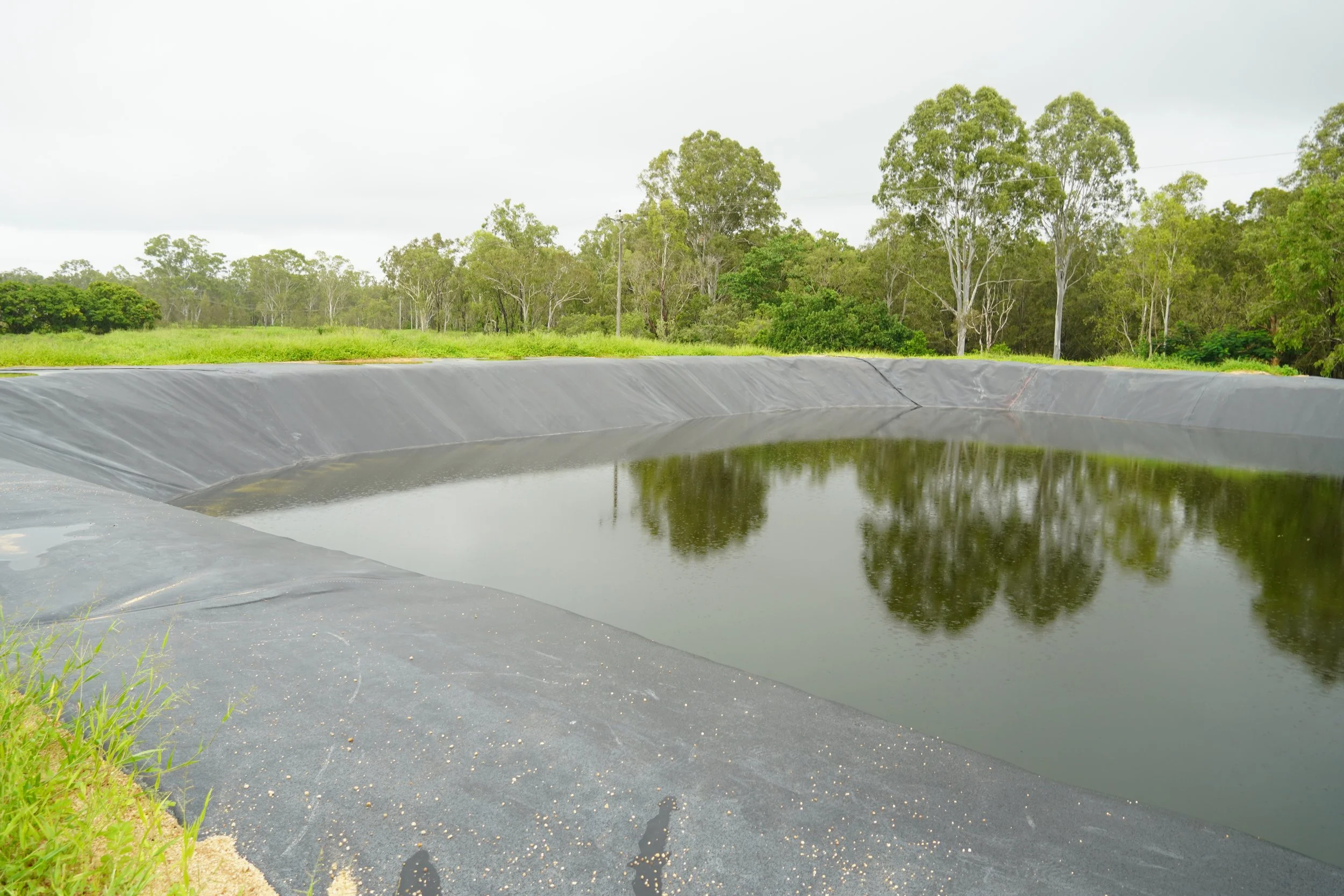
Lining their property’s dam minimises losses from seepage and further shores up water security.
The Caamaño family have seen their fair share of farming’s ups and downs over the last 40-plus years. From farming vegetables, citrus, and now coffee in Queensland’s Far North, Debbie, José and family have seen cyclones, frosts and everything in between.
Although they have decades of experience farming in the region, the family took a strategic approach to protecting their newest farm from weather- and climate- related risk.
Through the Farm Business Resilience Program for Horticulture, the Caamaño family undertook a whole of farm risk analysis and engaged with tools like My Climate View to understand the opportunities that lay ahead, but also to understand where they could be proactive in mitigating risk.
That process highlighted a clear priority: water security. When the Caamaños acquired the property, existing infrastructure was in a degraded condition, and a major water source for the property—the Tinaroo Dam network—was subject to maintenance, unplanned outages, or reduced allocations in drier years.
To address this, the family invested in installing a dam liner to secure their on-farm water supply. Combined with an existing bore to supplement rainfall in the dam, the family maintains control of the water, which ensures productivity in drier periods or dam network outages. Liner installation minimises seepage, further shoring up this water storage.
While the solution was cost-effective in the long term, it still was a substantial investment for the Caamaños’ new venture. Being guided through the completion of a Farm Business Resilience Plan proved critical, providing the structure and support needed to successfully apply for a Queensland Rural and Industry Development Authority (QRIDA) Drought Preparedness Grant.
Debbie Caamaño said that having facilitator support to navigate the application process was an immense help in successfully acquiring funding support for the dam liner.
“It’s very busy around here running two farms, so it was great to have help,” Debbie said.
“It made the whole process more efficient for everyone.”
With the dam liner now installed, Debbie, José and family have been ramping up their coffee production and processing with confidence knowing they have reliable access to water and redundancies in place should weather or dam network outages intervene.
Growcom’s Farm Business Resilience Program Manager Amy Nash said the Caamaño family’s project showed how practical business planning can help growers identify priorities and take clear steps to strengthen their business.
“These are the kinds of practical outcomes the Farm Business Resilience Program is designed to support,” Amy said.
“The process helps growers step back, look at where they want to take their business, and identify the actions that will make the biggest difference on farm.
“For the Caamaño family, water security was a clear priority. Through the planning process, they were able to access funding support to help deliver a project that strengthens their business and supports future production.”
Growers wanting support to identify business priorities, strengthen resilience, or prepare for future funding opportunities are encouraged to contact their local Farm Business Resilience facilitator.
The Farm Business Resilience Program is jointly funded through the Australian Government’s Future Drought Fund and the Queensland Government’s Drought and Climate Adaptation Program.